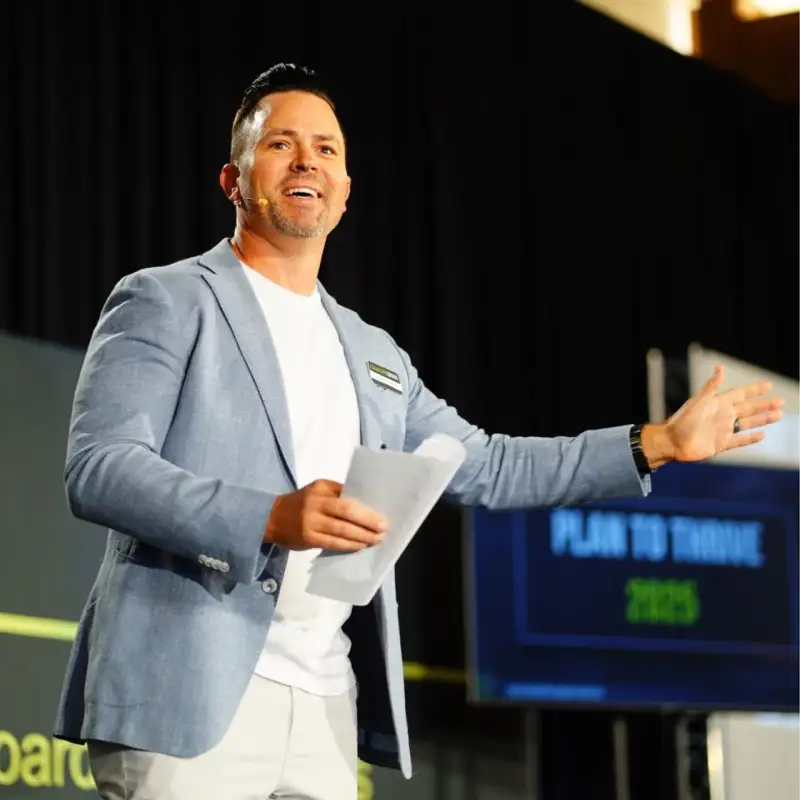
A masterclass in ops and leadership from the #1 rehabber in the country
INTRO TRAILER
Bobby Triplett (00:00.054)
In my space right now, there's no technology that's renovating houses.
Vince Harris (00:06.442)
Everyone's talking AI, but what happens when you talk to the people actually doing the work?
Last year I did 1,747 homes just for investors like your listeners and the people that we know on all these masterminds. I'm on pace to do about 35 % more than that this year.
That is Offerpad's Bobby Triplett on what it takes to become the biggest rehabber in the country, what technologies help, and what's just buzz.
Vince Harris (00:37.013)
A lot of AI projects are failing...
Bobby Triplett
Where I don't see a whole lot of value to me is...
Vince Harris (00:45.422)
This is ground truth, candid conversations with top prop tech operators doing the work at scale. So product teams build what the field actually needs. Let's get started.
START OF INTERVIEW
Vince Harris (01:01.04)
We've got Bobby Triplett with us from Offerpad. He is, I'm going to give him this title. He may not accept it or he may welcome it. I think he's the biggest flipper in the country. Hey, listen, man. I'm going to give him the title. He can refuse if he cares to, but I'll tell you what, he's flipped 40,000 houses, cut his teeth at invitation homes before coming over to Offerpad. And so I want him to give his own intro, but then I want to get into this conversation and let him give some insights on what it means to perform at that level. So Bobby, welcome to the show.
Bobby Triplett
Vince, thank you so much, man. I don't know if I'll take the title, but I will appreciate you attempting to bestow it upon me. Yeah, I'm Bobby Triplett. I'm the Senior Vice President of Renovation for Offerpad. We're a publicly traded iBuyer, which is a big fancy term for a real estate solution that we dabble. We've got our hands in a bunch of different operations in the greater real estate investment world. Coming up on nine years just with them, our company's
barely 10 years old, if 10 years yet. And it's been a wild ride so far. I'm excited to see what the future continues to look like as we partner with investors and in every shape and size around the country. So thank you for having me on today, brother. Glad to be here.
Yeah, absolutely, man. Absolutely. So there's so many places that we could go. I'm going to try to touch on a few things. There was some news. I'm not sure how much you follow Offerpad stock. I'm a recovering finance guy if I didn't say that.
I was watching it like a hawk yesterday, man. So that was great.
Vince Harris (02:34.702)
Dude, can we maybe start there and then we'll get into the op stuff? Sure. What in the world is going on,
Yeah, I think every single one of us asked that. mean, real estate tech stock over the last two years has really just taken a nosedive all based around the affordability issue with rates being where they're at. I remember, you know, when we went public within, I think, two or three months ago in public, we were a meme stock and it was one of those like I'm already counting the cashed out shares before they've spent, you know, I mean, before I even have done that, you know, fast forward.
two years later and you know, they're not worth it for me. Like it was not, my gosh, what in the world just happened? It's been wild. Like for me personally, I take that as like a personal vendetta. Like, okay, what can I do as a stockholder of our company, as an executive leader? What can I do to drive this stock up into the right? We're to try to affect and influence this as best as we can in a market that is not super favorable and.
Maybe some of that, comes, I mean, our last quarter's earning report that we just had was super favorable and we were highlighted in a pretty big way as a team on the renovation side with business. And maybe, maybe that had something to do with it. Maybe rising tides raise all ships. You know, there's a lot of speculation about the Fed doing some interest rate cuts, which will be like gas on a wildfire for everybody in the real estate tech space, just so we're clear.
So, so there's a lot in there for the uninitiated and folks who don't nerd out on this stuff like you and I do. Yeah. The real estate tech stocks. It's been tough. It's been a tough, tough run over the last couple of years, but specifically open doors really had a rough go of it. Right. Really had a rough go of it and getting threatened with B and D listed. And then all of a sudden this meme stock thing happens to them. Stock goes crazy. It's up like 50 or 60 X in some short period of time.
Vince Harris (04:31.382)
falls back to earth but then it seemed like you guys got swept up in some of that mania but there is this weird like reddit fueled meme stock thing happening
Part of this is like, okay, if this Reddit meme stock movement, if that's what it is, is helping open door, that's great. We'll ride some of their coattails there and allow that updraft to maybe amplify some of the good stuff that we've been really laboring towards over the last couple quarters. I don't know, I'm still holding, you know what I mean? I'm still here, I'm still like.
Like I'm doubling down. I'm not going anywhere. Yeah, this is where I want to be and this is what I want to help build so.
And this is actually a pretty good segue as I think about it to get into some of the op stuff, because I think about one of the things that, you know, the other shop open door has said is that they want to lean into being more tech forward. They want to embrace AI pomp. I'm not sure if you follow this guy's big crypto investor, big, and he says he wants the next leader to be a tech person and wants them to become the Amazon of real estate. This offer pads still primarily see themselves as a.
By renovate sell shop do they see themselves as a technology company and is that balance changing in your view.
Bobby Triplett (05:49.646)
Yeah, I mean, one of the things that our CEO has always said, Brian Baird, awesome guy, like I'd take two punches in the face for that guy this morning. You know what I mean? That we are a real estate firm with heavy tech influence as opposed to a tech firm trying to real estate. I think there is a big differential between the two. I mean, there's a massive amount of real estate knowledge, real estate investment knowledge, both from an institutional side and a private fix and flip side that heavily influences our company.
But we have an amazing product team. You know, we have a bunch of proprietary, you know, programs, softwares, interfaces that our product team has developed for our company as a whole. And at the same time, how do we leverage strategic technology, technological relationships? Because in this space right now, I think one of the biggest struggles or not struggles, maybe like the just the biggest headwinds is how do we prepare for growth? Right.
How do we position ourselves in such a way to be able to catch that tailwind when it comes? You know what mean? Without being so like front heavy, head count heavy. And so we can use technology to inform our underwrites. We can use technology for pricing, for project management, for some of those things, payments and accounting. We still have to swing hammers. We still have to, you know, boots on the ground. And so it's that sweet spot. Like, okay, how much is capacity before you break the machine?
And then how much are you gambling on capacity and volume and revenue to come? And I don't think anybody's got that a hundred percent figured out. I will tell you, we've gotten pretty darn good at managing efficiencies. And the only reason that I feel like we have insane amount of success, at least my, like on my division right here in renovations has 100 % everything to do with the people that I've got on the team.
the amount of time and energy that we spend on leadership development, on accountability, but for the sake of advancing the mission, not necessarily accountability for the sake of, know, gotchas. Because I'm firm believer in the person that like understands the why, the person that catches the big vision, the person that feels bought into the team and the team bought into them, like,
Bobby Triplett (08:13.186)
There's an opportunity to stretch, maybe to even get a little uncomfortable or to go above and beyond so that we can then force a need either for technology to be created or force an opportunity for the team to grow at an incremental headcount level where needed.
You know, a lot of people, Bobby say that that people are important. They don't always live that out. Sure. I tend to believe you because you've got an interesting path pre home flipper. Can you tell that story?
Sure. Yeah, I in a previous life, I was in full time ministry, was a pastor here in Tampa at a couple of different churches and ended up, you know, had some pretty big life changes around in 2013 and stepped down from doing ministry. And one of the guys that was at my church at the time was the president of Invitation Homes Florida. And he's like, hey man, I need a leader.
know, we're struggling, you know, invitation homes was maybe a year or two open at that time. And really, they're building the plane mid flight, you know, no one had been doing this institutionally from a single family rental place at this scale. He's like, I need a leader, I need some accountability. And I was in the spot where I had to reinvent myself. And I was like, okay, got what in the world am I going to do now and, you know, step down from doing the thing I've been doing 15 years and, you know, jumped both feet into the water blind, you know, fake it till I make it. And it was
It was an incredible experience of, you know, drinking from the fire hose and learning stuff. You know, I was pretty well respected, pretty well knowledgeable, had a huge amount of influence in the space that I was in before. And I was a nobody here. I mean, I knew how I was wired as a leader. knew how I was wired as a, as a vision caster, but I had to go figure everything out. And I made it a really big point of like, okay, you know, setting it clear expectations and not being a jerk in the process. You know what I mean? Like,
Bobby Triplett (10:11.266)
we were really able to turn around. I helped run the Tampa shop for rehab, maintenance and turns. And it was amazing the turnaround that we were able to bring. I'm super proud of it. Went from probably one of the lowest performing markets on that side in over a two year time period, probably a top four, top five performing market across the country, managing about 7,900 homes at that time. I'm proud of the lessons that I've learned there and the people that we helped grow.
What I'm still proud of is I still have a number of vendors and contractors that used to work for me at Invitation that still work for me today.
I totally get how ministry could help in leadership generally.
Sure. Yeah.
Shepherding a flock though feels a lot different than overseeing GC's. Is there anything that was oddly surprisingly compatible? Anything specific that you did as a pastor that you were able to lift and bring into that new role?
Bobby Triplett (11:13.846)
Yeah, I think, you know, when I was a pastor, like everything we needed to get done was with volunteers, right? So casting the vision and hoping that they show up, you know, was a regular occurrence in renovations. mean, if anybody's tried to get a homer out to come check your house, you know, like it could be a cooling teeth, one to get them to call you back and two to show up on time with any trade. Honestly, it's really hard to have earned the right for them.
to heed your call or to show up when you ask them to. And money doesn't always talk the way that relationship does. And I would say in all of this, the biggest lesson I learned is that this is 100 % a relationship business through and through. When something hits the fan and like we've got egg on our face and something went wrong, we stepped in it. If I'm calling up my flooring supplier and barking at them, right? Like.
I'm not going to necessarily get the response or if I'm leading from a place of fear, like if you don't get here soon and fix this, we're not doing business. You know what I mean? Like that's a that's a one shot. And then you probably done irreparable damage to that relationship. But taking the time to even if it was the vendor's fault or the contractor's fault, where they stepped in it like, how can I take this as an opportunity one for me to learn from it to to educate you and how to do it better so that you see like.
I would tell people all the time, like, want you to make money. I've also got to save money and we both got to do the same thing at the same time. So if we can find a way to do that together, this is going to be a beautiful relationship. It's almost like casting a vision and hoping that they show up because, you know, they could take somebody else's money if they wanted to, you know, and they would go work for them. I would say that relationship side of it. I mean, that's what that's the only reason volunteers are showing up. And quite frankly, in this this world today,
That's the only reason people are sticking with you is if they know and they trust you and they believe that you are there both for them and with them.
Vince Harris (13:12.59)
That's good, man. That's good. So stay there. I want to talk about systems, obviously. Maybe we start here, though, with human, with people systems. I have been struck, as I have learned more about you and your story, just how broad of a network of contractors. You're in 25, 26 markets, something like that. Yeah. What is the process for vetting contractors and partners? Do you have software that helps with that?
So as we were building this part of Offerpad, you know what I mean? I had nothing, no systems, no anything. And so one of my former employees and I, Yasmin Mullings, like we started opening up markets, like every market that we've been in, like I've had an opportunity to go open and some markets are easier than others because I just tap some relationships and put some cred list ads out or throw something on LinkedIn and I'll get a bunch of people to show up. But as our company moved into the Midwest, like a few years ago, four or five years ago, like
we started creating something I was super proud of, and it might seem non-sophisticated, but as we put out advertisements, as we tapped our relationships and our networks, and one of the things that we would do all the time, we call it new vendor orientation. We'd go rent out a ballroom at a hotel, get lunch catered in, I'd get asked for three hours of their time, I'd go evangelize the offer pad gospel and how they, you know, how.
the good news of how we could do this business together, spend a lot of time like, you know, answering questions, showing them how this works, why they would want to work for us, why they might not want to work for us or with us. And then we would, I would leverage other relationships. I would ask Home Depot to show up as well. And so they would send one of their executives like, here's why we partner with Offerpad. So, hey, it instantly legitimizes us. I'd have PPG paints there, national reps. Here's why we partner with Offerpad instantly legitimizes us.
And all of a sudden, it's not just me trying to convince them to do, you know, a volume based business with me. It's other people that, you know, have even bigger names than I do in the space or in the renovation world saying like, Hey, we partner with them. Maybe you should consider. We, I mean, we brought on over 1400 trades around the nation that do business with us that are all licensed, vetted and insured and proud to do that with them. I think there's been some cool technology that has come out around this and
Bobby Triplett (15:38.368)
Now we're a little bit more sophisticated in how we are vetting vendors and, know, checking some references and making sure that we're aligned. But yeah, at the beginning, man, was fake it till you make it. Let's figure it out.
I love this getting them all in the ballroom, ordering food, getting knee to knee with people. But even that, I imagine you had to systematize at some point, maybe even have a project manager who's got a whole, you know, run of show kind of thing for that day for that have been in that market for those particular trades.
Yeah, we would have our vendor management team, they would organize it from soup to nuts and we'd go in and it was like a road show. What's interesting is I will tell you this, the states that had super heavy or the markets that had super heavy institutional presences like the Invitations, the Progress, the First Kings, the Tricons, you know what I mean?
the states that had a lot of those, you know, institutional SFRs, finding vendors was so much easier. You get into the tertiary or secondary markets that not as much like the Minneapolises and the St. Louis's and the Kansas cities and the Denver's, like it was really a grassroots effort to find and weed through the vendors. And I think like anything, you're going to get people that are going to
want to believe in what this is or want to join. And then when they get into the, to the, the current it's there, maybe not built for it or maybe, Hey, we're truly a retail based contractor. Great. This is not going to be for you. I'll shake your hand. We'll be friends, but go ahead. Or, you know, somebody who doesn't know how to communicate or somebody who doesn't know how to invoice on time, all that kind of stuff. Like the opportunity is like, let me help coach you up because you can make money here, but they might not be ready for that yet. You know what I mean? And so
Vince Harris (17:27.426)
Yeah, I totally see where the retail guy who's always going to be kind of the retail plumber is probably never going to level up or may never level up to fit your spec. Are there clear thumbs up, thumbs thumbs down things for contractors that you say they got to have this or they absolutely cannot have that?
Right. Yeah. For me, like one of the biggest things had to be their local employees, their local boots on the ground. You know, we have like, for me, I have our local employees, our local project managers, our local renovation directors, some of our local foremen and crew like that accountability boots on the ground. Like they bleed orange. That's what we say because our colors are orange. They bleed orange for me. That's going to allow me to make sure that they're always taking offer pads, best interest or our clients, best interests.
on the way this property is renovated as opposed to like just like a bookie or a servicing agent that's just trying to dispatch, you know, from a centralized area and not have local presence.
Yeah. So to that point, even when you do a good job of betting, things go wrong. that's the nature of this business. What about post mortems? Is that something that you have systematized or does that still feel pretty manual?
No, so our acquisitions and dispositions divisions, like there is a lot of attention on what not only what went right on this deal, you know what mean? But what went wrong early on? It was probably one of the most frustrating things in the world because the easiest opportunity was, Reno blew the budget, you know, or Reno did this. Reno did that. I get super frustrated like guys, I can only blow the budget.
Bobby Triplett (19:07.596)
Like if you don't give me enough money to do the things that you asked, you know what I mean? Like this still costs $500, but you only gave me 200. I'm going to blow the budget every time. So I think we've really got sophisticated over the years as opposed to just trying, because there's a lot of wrong metrics that are out there, right? You can see a particular number and it does not tell the story if it's not the full contextualization of it.
So give us an example of one of those numbers that can be mis-
Like, for instance, one of the most frustrating things to me is when people budget or not budget, they emphasize, hey, were you under budget? Boom, this is a win. You're under budget. Like, I could tell you a million different reasons why under budget is not the way you want to manage your job. Like, for instance, like if I incentivize one of my project managers to be under budget every time, guess what's going to happen? He's going to be under budget every time. And guess what's going to get what's going to suffer either the quality or the workmanship?
and or the product that we're then putting out on the backside. So we would have at the beginning, and this was me personally, and I learned this lesson the hard way, I'll never forget as long as I live. We're just getting started. I'm basically a glorified project manager here in Tampa. We didn't have titles or anything like that. We're getting this thing going. And I had a 1920s bungalow, which every flipper thinks is super sexy and cool. I love it. They are money pits every single time, because they're typically held together by termite excrement.
They're going to need all the major mechanicals. If it's built in the 20s, man, like it's going to have knob and tube. It's going to have cast iron. It's going to be uninsurable. And with hurricane regulations where we're at, there's different loops you have to jump through to help make sure these things will be insurable on the back end. And I've been hearing, just be under budget, just be under budget. Well, this this thing was already about to be over budget and I hadn't ordered countertops yet and I took it upon myself. Hey, you know, I could save a couple grand here.
Bobby Triplett (21:03.948)
Let me not do granite. I'll just put laminate tops in this. We'll get it under budget. It'll be great. I got it done a couple of days quicker because it was faster to get laminate. This is nine years ago and I was feeling super great. Comes back in a postmortem and everyone is furious. What I didn't realize because that particular metric in itself does not tell the whole story. The acquisition team, when they bought that house, they underwrote it to a specific spec.
That's that what they're hoping to get on an ARB was in competition with everything that had granite tops. Well, I put out a house that does not have this and now our comp level is down. So I was under budget two grand, but we lost five grand on it because we now couldn't hit an ARB. And I tell that story because in a vacuum that feels like, man, I just won and I did. And I was so offended, Vince, like, man, like I thought.
You guys are moving the goalposts, but it had a lot to do with not knowing the entire story. So nowadays, like our chief real estate officer, Vaughn, there, we're doing a post-mortem on everything to understand like, hey, did we underwrite it correctly? Did we budget on the front side? Was our underwrite informed to the actual comp level that we were hoping it was gonna be? Then did renovation, were we able to maintain?
the assumptions on underwrite on the cost that it would take to get us there. Did we get it done in time? Were there unexplained issues that were behind walls that no one could see? How did we manage transitioning it from acquisitions to renovations and then renovations to the disposition side on the market? How did it perform when it was on the market? Were there how many people touched it from our side while it was listed? All of those type of things so that way we can see a true postmortem of how did this property perform?
Cause what really is tricky, and this is where I feel like any real estate investor and honestly, most institutions have to really think about if I only win in renovation, right?
Bobby Triplett (23:11.766)
And the other two acquisitions and dispositions take it on the chin because, you know, they sacrifice their whatever to the altar of this. Like, man, did we win it? Like, that's not going to be a win for the whole on that property.
And where does that live that postmortem that cross silo cross department postmortem is at a tool and is it something that you built.
So we are proprietary software. call it Helix. That's where every person who goes to offerpad.com and wants us to make a cash offer, that record of that property is there. And the data translates from silo to silo or division to division to division. And then there's analytics that we built in there to help us make sure, you know, from a calculator side on the underwriting to property performance side, that's there. And then honestly, instead of just taking the numbers,
that gets spit out in the analytics, then it's a people conversation. All right, let's get the owners of this particular property. Who was the acquisition underwriter? Who was the renovation director or project manager? Who was in charge of disposition? The benzer or the buyer's inspection side, everyone who touched that, what's the story? What happened? What did we find out? How many actives were there that we bought? What were the comp levels that we appropriately underwrite to?
what happened when we were actually swinging hammers? And one of the things that I preach on a regular basis to my team, and they probably roll their eyes, but I I feel like it matters every single time is being able to control what you can control. And sometimes I can't control what the recipe is on the house because, it's gotta be insurable. It's gonna have to have a new roof. It needs some foundation work. Man, if I can shave a few days off of the whole time, if I can make sure that
Bobby Triplett (25:01.1)
I did it right the first time, so I'm not having to go backs all the time. So on the buyer's inspection, there's a million things pinging. I can positively affect the ROI of that property and how it performs more than that. I don't, I'm not going to have to waste time in a post-mortem chasing down, you know, the, the reasons why it didn't perform because like, at least I know this part and then making sure that from a
Technology side that we are annotating along the way that we have pictures to document. I tell people all the time if it didn't happen in Helix, it didn't happen. So like, I don't care if you had the best intentions, like it better be annotated because come that Monday morning quarterback, like we want to make sure not just as a CYA, but so we can tell a better story and we can learn from our processes.
Now before you built helix did you try to do something to try this with something off the shelf.
But early on in the days of Offerpad, we were using another off the shelf renovation software. It was more built for new construction as opposed to like renovation project management. And quite frankly, nine years ago, the technology was not as sophisticated from a cellular data spot. And it was, it was more clunky and cumbersome than needed to be. Early on we were using.
Google docs, you know what I mean? Like we were trying to manage everything off of Google docs, which I don't recommend that by any means. And, you know, we built Helix. went through multiple iterations and then Reese, but still our scoping, which a lot of our people still have a lot of fun nostalgia for, like our scoping was done on some very sophisticated Excel documents that preloaded pricing, all this kind of stuff. And that we use that for about seven years. And it really, we got really proficient at it.
Bobby Triplett (26:53.164)
It was really good for our project managers. was highly archaic for accounts payable for the disposition team, because you're who's got the time to pull up an Excel document that's 50 pages long to sort and see like that we pay for that one thing, you know? So we built an entire new sophisticated scoping tool that lives within our helix system, pulling data from all of it, talking to all the different. we call it Renault captain.
We've been live for about a year and a half. That's an iteration 1.5 and it's getting there.
If you had a magic wand, Bobby, is there, are there still any places where, maybe it's not Google docs, but you're, you know, you're MacGyver in this thing. You're, you're, Scotch tape and bubble gum and something. Is there anything you'd like to wave a magic wand at in your internal processes?
Yeah, I mean, there's a couple like iteration 2.0 of Renault Capin that we're waiting for developmental dollars and allocations. I think one of the things for us, because we do a lot in some of the government REO sectors for renovation, they're some of our biggest clients. Their pricing is very specific to them. Like they've already pre-negotiated stuff that might not be like, we might have a better opportunity over here. So we don't have a, our, even in our scoping tools, like we're
How can we make customized pricing in our scoping tool on a client specific? The difference is, and this is one of the trickiest things, Vince, is our pricing is also not universal. It's market-based. So labor costs are different in different states. it's not just a, oh, that's great. Have a dropdown and see if this amplifies this percentage or takes this percentage. No. You're having to do it on a market-specific with a labor-based cost difference.
Bobby Triplett (28:44.97)
Is it a labor union friendly state? Well, then that's the biggest pain in my butt. So now I have to be able to charge more to be able to get them to actually show up there, you figuring out that stuff. So it's a little bit more complicated than this guy can count with this, both his two hands and his two feet. We're working on, you know, our developers are working on some problem solving there for us so that we can offer less MacGyvered client specific pricing.
and folks under, I think you're over 40, Bobby, people under 40.
I like how you say you think. That makes me feel better, man.
I'm serious. wasn't sure. yeah. Amen. Yeah. I was just preaching, you know, how good us Gen Xers look, but I think people under 40 may not get that MacGyver reference, but he could make it work with matchsticks and tinfoil. Yeah. You know, it's down to the wire. He's going to die unless he figures something out and he would make it happen. So it sounds like this is very specific. Did you ever consider fixing that MacGyver thing with an off the shelf or was that never even?
and options.
Bobby Triplett (29:48.974)
Because of our two different proprietary systems, one, where all the properties live in, and then two, know, Renault Captain being almost like a plug-in, but a very sophisticated, I mean, you think about anything you could possibly put into a house, there has to be the opportunity to build it, to modify it, to annotate it, to measure it, to quantify it, to calculate it. So it's a, I mean, it's a big, it's a big tool, but we needed it to be able to
cool the existing data, be able to report into the system so that we could track it. We tried, we looked at a handful every time we did, it felt like square peg round hole. then the cost. Oh my gosh, this is a couple of years ago. Builder trend was one that we looked at. Yeah. No worries. They're great tools. were just, it was a little bit of square peg round hole. We also looked at Renault walk, which was a Home Depot created tool that a handful of the biggest FRs use.
It was more single-family rental based. You know what I mean? it had a, though you could kind of manipulate some of it, it didn't do everything we needed it to do.
So I was talking to a buddy of mine recently, Bobby, he is a builder, does like fee building things. He's been in the game for a long time, rode the SFR wave that has obviously cooled, you know, a and but it's going to surge again. I think he said that, right. He said that what he's hearing in his circles is that the product is going to get smaller. So during pandemic, I remember going to I am in I'm not sure if you've ever been in that conference.
Many times. I'm sure. So and I remember during COVID, there was all this talk about because 3-2 has always been the standard like forever and ever I'm in. And I'm in during COVID, they were saying that the Zoom room was going to become a staple. And so the four bedroom was going to become the standard box. Well, my buddy recently is telling me that one, because it's so expensive to build and I think affordability of what people can afford to actually buy. He said the buzz is that the product is going to get smaller. And so
Vince Harris (31:55.788)
re-bedroom smaller footprint, smaller square footage is where they are trending. Have you heard anything like that? And what do you think about that notion?
I mean, not necessarily. I mean, you look at the big five, they've got a very specific buy box, you know, 1990 and newer, like they're three, two, four, two, like they're, have like different, you know, sweet spots for their rent returns. You know, some of the private fix and flippers that we have, mean, I, we do a lot for people that on the fix and flip, they're, they're okay with the two, two or the two ones, you know, cause it's got the yard and it's like the starter home. And then we have a handful of clients that do a lot of section eight fix and flip. And so.
They're trying to get as many bedrooms as they possibly can. It's been interesting though, like we have a new client just recently that they are doing almost kind of like that pad split model where, we're going to eliminate the public, you know, the family room and the living room. We're going to shove two more bedrooms in there or another bath. And now we're renting it by the room. we.
Even as you but but this is actually really fascinating to me. We talked about my partner and I have talked about this co-live thing and just how big it's becoming. Like I know people who are now, you know, renting a room somewhere, right? Because it just it just makes sense. know, frankly, it's so hard to find something they can afford. Is that just a new you a new spec for you guys to renovate to or has it fundamentally changed? OK.
Yeah, because we do some multifamily, right, on the renovations and turn side. We do a ton of single family, right? And then we've even done vacation rental renovations where we've had clients that are like, hey, we're going to turn this into an Airbnb. So we dance in near a beach or near a mountain or near a park or whatever. So they want to do a couple extra things that maybe we wouldn't do for a traditional fix and flipper. But recently, this pad split or this co-living space idea
Bobby Triplett (33:48.006)
we've seen a lot more of it. I I think about like in like the 40s and the 50s, you would have these people that would get these old Victorians. And you know what mean? They would, you know, shove a bunch of bedrooms upstairs and they were kind of like miniature apartments. And you know, you had a house mom or a house landlord that, you know, would do breakfast in the morning and you know, people could kind of come in and communal living. I'm sure you still see stuff like that happening all the time. And like the
the major cities like the Chicago's and the New York's where real estate is at an ultimate premium. But now we're seeing it in places like Orlando, Florida and Atlanta, Georgia, Dallas, Texas, places like that starting to pop up everywhere.
Yeah, yeah, for sure. I don't think that's a trend. think this is a secular shift. I just think that. You know what I mean? Renting, I think owning a home, and I'm not happy about this per se, but I think owning a home is probably going to be a luxury. Item, unless we fix zoning, unless we fix, you know, just bring in more inventory online, that that's a conversation for another day. Yeah, for sure, for sure. I don't think a lot of people realize that they can hire offer pad.
to do their reno for them. Can you talk about that program a bit and where you operate, who's a good candidate for you?
Yeah, we call it Offerpad Renovate. A couple of years ago, my CEO came to me, you when the rates started going through the roof and everyone puckered up across the country. We went from a 1200 house a month acquisition appetite to just a few hundred houses. And I'd built this incredible team of amazing leaders, renovators around the country. And, you know, he said, let's leverage this machine you've built to go renovate as a service. And we did a bunch for some of the bigger REITs and some of the midsize institution. But in the last couple of years, like our bread and butter,
Bobby Triplett (35:30.066)
is the private shop, the smaller single-family rental or the private fix and flipper who's doing a couple of houses a month. Basically, we take their home, put it in our machine. So our project managers own it like it's theirs. Our vendors own it like it's one of ours. All the pre-negotiated contracts I have on supplies and timelines and expectations and all that gets applied to basically this home.
We change the recipe based on, say if it's your home vents, like you want to do X, Y, and Z in it, okay, we can augment. As soon as we get approval, we're off to the races. We're trying to get it done right the first time and faster than anybody else. And because I've got a national buying power in my volume, that's leverage. That same level of vendor loyalty gets applied to your home.
Last year, I did 1,747 homes just for investors, like your listeners and the people that we know on all these masterminds. I'm on pace to do about 35 % more than that this year. It's been like off to the races, averaging a few hundred a month that we are flipping just for investors on top of renovating our own. What's really cool about it is instead of you having to go hire your own project manager, find your own contractors if they show up. You know what I mean? Our project managers and our renovation directors, they...
They own your project for you. So you can go focus on sourcing your deal. You can go focus on expanding your business or selling or doing the disposition or joint ventures. We can focus on the pain in the butt stuff, which is what we have gotten really good at in the field. And it's fun, man. I tell people all the time, we're like the rental car and you don't have to change the oil or the tires and you can ride us hard. You know what I mean? And that's what we're built for.
It's interesting. The new CEO, Red Lobster, has been on a crazy press run recently. And he said something in an interview that really struck me. said, Red Lobster is the number one buyer of, I think, both crab and lobster in the world. Wow. yeah. And so just the sheer buying power, I think, had had been lost on me. nobody thinks of Red Lobster as a luxury as a luxury or like a fine dining experience. Yeah.
Vince Harris (37:40.226)
but they buy more lobster than any other shop in the world. And so I imagine you guys have a similar like who's flipping 40,000 houses or 1800 houses in a given year, 1200 a month at one clip and still hundreds a month. And so your pricing, that is what the customer of this gets the benefit of.
Would you say pricing is definitely there? Consistency of product is a big one. And then like you might have an uncle who's an HVAC guy who could do it for 100 bucks less than us. But then you got to go manage it. You know what I mean? You get project management and then that experience. Honestly, like we've helped a number of private fix and flippers like, hey, you you don't want to over renovate this house. Let me give you a couple of tricks that you could do here or hey, run for the hills, please. A lot of times.
we can help private shops or mid-sized people avoid those catastrophic decisions.
Yeah, that's huge. That's huge. Ounce of prevention is worth a pound to cure. My mom always said, you know what I mean? So my mom actually was a minister. So was my granddad. yeah, having affinity for preachers. So it's good having you on, man. You know, let me close with this. We started out talking about, you know, sort of technology and the reframing of a lot of these real estate companies. How much are they tech? How much are they real estate?
Preacher? Preacher?
Bobby Triplett (38:48.046)
There you go.
Vince Harris (39:05.71)
There was a study that came out recently that said that a lot of these AI projects are failing because they've been deployed to like sales and marketing stuff. And they said, really the, the, the juice, the upside is going to be in back office and back office processes that could be automated or made to run more. Yeah. I was going to ask you, does that resonate with you and what would you say? So again, my listener, they're building.
you that.
Vince Harris (39:31.616)
CRMs are building Legion stuff too, but they're building stuff for operators. Where should they be focusing? Yeah.
If I'm looking at my own systems, one of the things that we're getting ready to deploy some AI energy into has to do with client communication. If I've already got PMs that are updating our system, how do we automate those to send out triggered updates to the clients? Or maybe not. How do we differentiate all this kind of stuff? How can we take the customer experience and keep them the most in the loop?
on the things that matter the most while still not having to double the efforts of annotation and administration function. Like, I mean, if we can, if we can track where our FedEx is at all given times, but you know, are there opportunities to track where your project is in the, or your payment or like, you're your sign for your house. If you're going to sell, whatever it's going to be, like there's opportunities. Like I could see it a whole lot of value that's happening there where I don't see a whole lot of value. And then to me is like, Hey,
I took a couple spins and AI told me exactly how much it's going to cost me to renovate this thing. get like people are trying to do takeoff tools that, I, think they're just super young in that and their development. It's going to take a while. Like the 3d aspect of it, what's behind the wall. I mean, I, I use chat GPT all the time and I'll ask it to make a picture and it still can't get right. What I'm asking it to do. You know what I mean? And so like, there's gotta be some super sophistication.
I mean, pictures can't you can't smell a picture yet, you know, to be able to really find the things that the renovator, the contractor, the real estate agent have that expertise on, you know what I mean? So I don't think it's replaced it.
Vince Harris (41:22.39)
Awesome, awesome dude. Well, dude, this has been great. And folks, you heard it here first. The great frontier, the vanguard of real estate tech is Smell-O-Vision. If you can...
No vision mode.
If you can crack the code on Smell-O-Vision, you got a ready and waiting buyer in Bobby Triplett.
There you go, brother. There you go. so much for having me on, man. It's been my absolute pleasure, brother.
This is great, man. Thank you so much for taking the time. We appreciate it. Kudos to all your success and wishing you much, more.