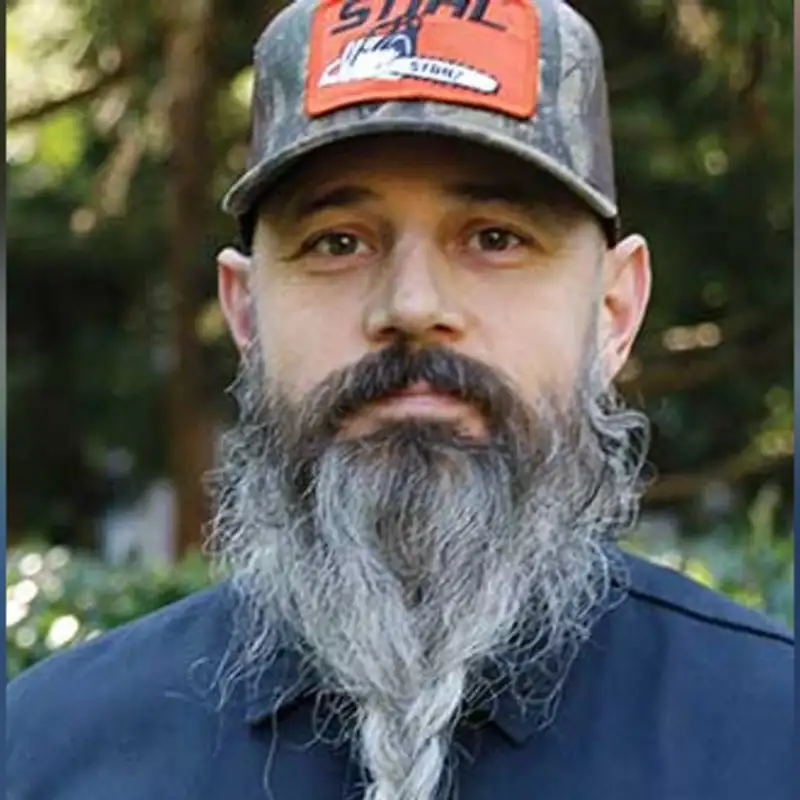
"AI Will Kill Bad Loan Officers" Aaron Chapman on Mortgage Tech
Vince (00:01)
All right, so we should be live and let's kick it off. All right, cool. So welcome, guys. Welcome back to another episode of Ground We have had a bunch of really good guests and today is no exception. We kind of lucked out here again. Just, you know, setting the stage, you know, for folks who are new to the show, to the podcast.
Ground truth is exactly what it sounds like. The idea is to give you the ground truth, what is happening in real life in the field from operators who are doing this business at a very, very high level. and I know you guys are the best technologists in the world, our customers that is, but to the extent that you are looking to service people who work in mortgage or work in different ⁓ areas of the real estate business,
One of the services that we want to provide to you is to bring in very, very high level operators so you can hear from them what they're doing, and what they really need, what they wish existed. And so that's what Aaron is going to provide to us today. So anyway, our guest today is Aaron Chapman, 25 years in the mortgage and the loan industry, ⁓ a top, top performer, top 1%, I believe, of all loan originators in the country.
pretty fricking tough to do. I'm gonna let him give his own background, but first I want to give you just a really warm welcome and thank you for coming on the show, brother.
Aaron Chapman (01:27)
Thanks for letting me on the show, man. It's like, it's one of these things where I feel very, blessed when people will look me up, listen to what I've done, listen to me on places, read some of the stuff that I've written, and be like, oh yeah, we'll let that son of a bitch on. It's like, I don't know if you're putting a lot of trust in me or you're like, hey, audience, I think you guys got some guts and we're gonna throw this son of bitch at you.
Vince (01:53)
Well, you know, it's funny you say that I wasn't going to get to this until later, but let me tackle this real quick, right? Because you're being a little bit cheeky here. You know, letting you on, dude, you are as credentials as they come. But I do think that, you know, people probably tune into the show. They look and they see a guy, you know, in a trucker hat with the long beard and stuff. And they go mortgage professional, finance professional. But, bro, I love.
your perspective on that.
Aaron Chapman (02:23)
Okay, so I had learned early on in my career how you're supposed to act, how you're supposed to talk, how you're supposed to look, how you're supposed to dress. When I started in the industry, I came from the mines of northern New Mexico. They shut down because it was costing too much to get to the ore to the surface versus what the market was willing to pay for it. Then I stumbled into this industry as a telemarketer and everybody's telling me what to do, how to do it. I had to cut a foot off of my hair, shave, bought polos. My mom bought me polos and stuff so I looked businesslike.
But I was getting, I was having a difficult time getting to that point of developing real good business because what I discovered was I was lying to people with my appearance. How I spoke to them and how I appeared to them was two different individuals. And then I started seeing all the guys that are telling me how to act and how to be and what to do and they were no longer in it. They're all leaving but I'm still here. So finally got to a point, so I can't do something, screw this, I'm doing it my way.
And I had to go through several different stages of things happening to me to finally get to that point of deciding to do it my way. And that's when I discovered the pattern interrupt from David Sandler. I wasn't much of a reader up until I was about 40 years old. I started understanding that pattern interrupt and people started telling me, you're your own walking pattern interrupt. So.
You start to find out that humans, don't hear the answer unless they've actually asked the question.
When I go to events and I've been invited to speak places, and they'll say you have a veteran in the finance industry since 1997 that has done upwards of 150 transactions a month for real estate investors, things like that. You have a specific picture in your mind of this individual. And I tell people to picture it now. You've got a guy in a very expensive suit. Not that I don't have some, but I do. A very expensive suit, ⁓ possibly wearing glasses, and more than likely has his hair part on the left.
But what you have is a guy that steps onto the stage wearing a camo button up shirt, a trucker hat, and a braided beard. So automatically, like, what the hell is that? And how is that a banker doing what I need done? So because you asked the question, you now have to hear the answer.
Vince (04:41)
Well, let's talk about this. So for you, this is not a costume for you. This is not a character. ⁓ This is I think how you are natural, how you show up in the world and more aligned with how you came up. I know that, you know, you grew up chopping wood to heat the house, right? Grew up fairly close to the land. You want to talk a little bit about your background there?
Aaron Chapman (05:04)
Sure, sure, sure, sure. So I grew up in a very, very blue collar family. My dad was a miner for most of my life and we lived in...
in rural part of New Mexico. And we end up every year, we go up in the hills, the Zuni Mountains, and we would cut wood to heat the house every winter. And it was a really, really cool experience. You started to learn what hard work was as a very young age. And I really enjoyed the hard work. And then from there, I went from, and that speaks to why I wear the hat that I wear, right?
inevitably something would happen and one of my and my grandfather's saws would go down my dad would end up having to do the cutting the rest of it with that steel that steel always worked the steel 041 is what it was
and I got to understanding that wait a minute, having something that always works, that you can count on, that's a big deal in life.
And the reason I wear the hat is to remind me that what it sits upon is the most creative, the most unique, and the most beautiful tool ever created in the history of the universe, which is the human mind. But, misused for a second, it not only can destroy you, but can destroy everything around you. So you gotta be very, very focused on what you're thinking every day. So I put the hat on my head and remind myself, I have to be focused, I have to not misuse this tool.
Vince (06:12)
Yeah.
So the reason I love that story so much, there's a couple of reasons and we'll unpack Aaron, I was sharing with somebody recently that I've been working in real estate tech for a long time. And it's weird how even though I work in real estate, you can get pretty removed from...
the land from the actual dirt. You know what I mean? And so I took my family to do this wilderness survival training ⁓ a few weeks back and we loved it. know, 90 acres we spent all day out there like learning how to create shelter and filter water and just just general survival skills and stuff. And it was great. But it was just a stark reminder how far most real estate guys are from the actual dirt. And I love the fact that that is not.
your story And so just love that you have brought all of that your whole history and your whole self to the work that you do. ⁓ I'd love to hear how you did make the pivot. How does that guy grew up, grew up wanting to be a minor, right? How does that guy become a mortgage professional?
Aaron Chapman (07:17)
After I graduated high school, I went from there to the oil fields of Wyoming, which was absolutely amazing. I had a blast there. I loved cattle ranching and I love the oil fields.
because you got to learn a whole different trade, whole different group of people. The risks were extremely high and you got to really, you had to prove yourself every single day there. ⁓ And there's a lot of ways I had to prove myself
So I've had to do a lot of interesting stuff and then from there went to run heavy equipment, drive truck and I had an opportunity to work in the mines of northern New Mexico with my dad because they had sold the ranch. Partnership went bad.
And it was awesome. It was on the coast of Colorado border near a place called Red River outside of Cuesta. We lived in a cabin on mine property. Then we'd go up to the mines and work for 10 hours underground, come out and then do this shift again. It's just enough time to sleep and go do it again. It was really hard work. You're going several hundred feet underground. You're running this heavy drill machine that you're having to personally manhandle. It's about 160 pounds. Do about 31, 32 holes in the six foot holes that you're drilling out, pulling it out.
load it with a couple hundred pounds of explosives, blow it up, clean it out, support the ground, do it again. I loved it. But after some time they shut down that project, I came back to Arizona. I had a wife and infant son here and I came back and thought I can get a job easily.
And I kept getting hit with this one statement every time I applied for a job, overqualified, overqualified, overqualified, I didn't know what that meant. All I knew was I wasn't getting the job that I could easily do. I end up
I broke down and applied for a $10 an hour truck driving job just to haul landscape rock in 1997 because I needed something and to me it was probably the last ditch effort of getting any sort of paycheck and they gave me the same BS of overqualified so
So as I'm walking in my truck, wiping tears from my eyes, feeling very, broken. ⁓
I remember I had a coupon for free diapers that my wife gave me as I left because we didn't have any money for diapers. And I'm driving from Chandler to Gilbert, and my gas light comes on to my truck. So, I'm like, crap. So I found a grocery store that corresponded with the coupon that also had a gas station out front. So I pulled out in front of that gas station, pulled up to a pump.
I got out my debit card, it's the only form of payment I had. I said a quick prayer hoping it would work, swiped my debit card and I got a decline.
From there, I was forced to dig through my truck, found a couple of coins, hoping for a lost dollar. I locked the doors. I walked up parking lot for what felt like a couple of hours, embarrassed for every penny that I saw that look around, make sure I was looking to see that I picked that up and I pick up every coin I could find. But I got enough change to get a couple of gallons of gas. I would exchange these these piles of coins for
gas, Then I went to the grocery store and I stood in line with those diapers and I waited in that line to pay for the one item I had with a freaking coupon. But it was really just beating me into a position of humility that I would accept something that I would normally not would. And as I'm leaving that grocery store, I heard the worst word I could have ever heard. It was my own name.
Somebody recognized me at my worst point.
It's the place I didn't want to be. He was found by somebody who knew me at the worst point of my life. So this guy, he said he started talking to me, asked me how things were. and I sugar coated the piss out of that. He said, hey, let's go to dinner. I'm like, I'm sorry, bro. I'm just not in a position where I can afford going out. He goes, no, I got a gift certificate to Red Lobster from a client. I'm like, what do you mean from a client? He goes, I'll share with you at dinner.
That weekend we went to Red Lobster in Mesa, Arizona off the 60 freeway and he shared with me about the mortgage industry. Well, I cut a foot off of my hair. I shaved. My mom bought me some business like clothes and I started as a telemarketer in December of 1997 and that's how I got in the mortgage industry.
Vince (11:10)
So, there's so much ⁓ that I think a lot of people won't get Aaron until they go back and watch this again, or maybe read your book. I don't want to get ahead of ourselves, but you have told your story in print form. We're to have you come back and talk about that because you have had such an interesting life. ⁓ Yeah, man, it's going to be a ball and it's I've read it, guys. It's fantastic.
So. That prayer is answered. You get into mortgage thanks to Keith. Takes you to Red Lobster. I'm not sure if they had the cheddar bay biscuits back then, but hopefully they did. So so so that made it doubly a good. That's a that's a twofer there. So you get in the mortgage. Walk us through how you get from there to becoming maybe not to your absolute peak as a as a loan officer, but walk us through.
Aaron Chapman (11:45)
They did, they did brother.
Vince (12:02)
learning the business and getting to the place where you said, is my calling.
Aaron Chapman (12:06)
So a lot of demand. It was a wild ride. When you're at the little broker shop, first start off as a telemarketer, they just give you lists. Call these people. And you're trying to, you don't even understand the language yet. And you're having to call people and develop a relationship.
I got to the point where I needed things to work all the time. You're always trying to get something happen. I remember it was December of 1998. I still hadn't gone full time yet. And I knew there was going to be no closings in January because of the way my pipeline was. But a guy called up.
December 23rd and he wanted to I think it was December 23rd He wanted to meet face to face to do his refinance like awesome and it was a decent sized refi But he wanted to be on Christmas Day So I went Christmas morning. I opened up the office I sat down with him in his old his son this guy was in his 60s son was probably in his 30s They lived together and I did that application. I did everything they wanted I locked that rate that they wanted got everything to closing and in January is my one closing I was gonna at least be able to pay my bills
Sent the closing docs to title, waited, they didn't come. I called the title officer, where's these closing docs? Like, um, who are you with again? I explained her as she goes, oh, they signed somebody else's closing docs. So I called him up. I said, wait a minute, what's his deal? You signed somebody else's closed docs. says, oh yeah, they gave me an eighth of a percent lower interest rate. Mike, why, why didn't you talking about this? He goes, it's up to you to have the best deal. And I signed the best deal. I'm like, I came to the office on Christmas morning. I have three kids or two kids at the time.
He's like, that was your choice. I learned a hard lesson that day that when you start giving to somebody who's willing to take that much from you, they're definitely not willing to give back to you.
And that's when I stumbled into the real estate investor in 2003, coming into Arizona from California. So I started helping them and it was awesome. I developed a very big business of a lot of people coming in, closing a lot of deals. was in the top, I think it was the top 5 % in the company of country wide. I the number one in my branch, number one in the area and then...
I got, we started coming up into the crash of 2008. 2008, I was still doing very well. I still had a decent income coming in. My business was fairly predictable. And then I needed to clear my head. There's a lot of stuff happening in my world. And August 8th of 2008 was coming up and eight's my lucky number. So I jumped on a Harley. It was heading out of town for a ride for three days and 15 minutes into that ride. There was a 17 year old in his father's truck, not paying attention. He put me into another car on the, on the one-to-one freeway at 80 plus miles an hour.
I woke up that night in a hospital bed with no memory of the day, two shattered legs and the inability to use my right arm, a bunch of broken ribs, ⁓ enough of a head injury even though I had a helmet on, cracked the hell out of the helmet, that my brain would recycle every three minutes. So I have to keep asking where I'm at, where am I at, where am I at?
And so I went in there at 190 pounds. was a marathoner. I was a rock climber, mountain biker. I had a net worth approaching 3 million because of real estate and stuff we had. By the I got wheeled out of there a few weeks later, I was in a wheelchair. ⁓ I had a negative net worth of 1.5 million and I was 156 pounds. And I had to come back from that to learn how to walk again.
Vince (15:25)
Wow. You see why you guys need to read the book? let's just stay here for a second, because now we're getting into the nitty gritty. This is where personal and business are like deeply intertwined. ⁓ Memory loss, ⁓ net worth is cratered. Talk to us about the business that you were doing and how your fortunes financially.
could swing so much in the course of a few weeks. Maybe help people understand the distinction between loans for investors versus loans for consumer. And then let's talk about the economics of a deal and what it means to be an LO.
Aaron Chapman (16:03)
100%. So if you look back at that time, 2008, everybody is losing their home foreclosures, short sales. I've helped my mom with a bunch of short sales. And when you're targeting the homeowner, the person buying a house to live in, you're starting to find there's fewer and fewer able to do that. So they're short selling their home and they're having to go rent something else. So you start finding that the rental market was increasing, even though the housing market was decreasing in value significantly. We came off of the greatest supply we had versus demand. So the supply was huge.
Demand was low.
So it brought the price of housing to a point where the real estate investor became the savior of the real estate economy, if you will. So because of my positioning and where I was at, I happened to just stumble into a couple of deals that came my way that I was able to close for some people selling houses that were buying the cheap houses, fixing up and flipping them. I was able to close two deals that other lenders couldn't close because of my history of doing complicated stuff. They invited me up saying, we want you to do all our deals. I'm like, you don't have to twist my arm.
I'm all about it. And just then, one of the other members of the family, he has a big marketing company, Markets for Real Estate Investors, was coming into Arizona with his group of investors and they started buying from that group. I was their designated loan originator.
So I started interacting with them. So because of those little just connections here and there, I started working with investors buying a bunch of Arizona houses. And they were cheap loans, man. They were buying houses for $70,000, $50,000 loans. Nobody wanted to do those loans because you weren't making a lot of money, right? You're making a couple hundred bucks a deal. A lot of work for hardly any money because no...
The banking industry did not want to finance those. You had to fight to get them done. It was always war, but I never gave up. I would jump planes. I'd fly to Texas. I'd fight it out with him a corporate and we get deals done.
And then they went from Arizona to Indiana, then from Indiana to Texas, then Tennessee, then Missouri. And they just kept buying houses and they kept saying, hey, this is my lender from Arizona. So I had to get more licenses and more licenses and more that grew into an international business because those handful of clients that start buying from other people.
Vince (18:15)
Are investor loans, speaking from the perspective of a loan officer, are investor loans more lucrative? I know they're more difficult in a lot of ways, but do you make more, what's the actual math on how you get paid on an investor loan?
Aaron Chapman (18:32)
less juice in a single investor deal than there is in an owner-occupied deal. And the reason being, investors buying a house that has to have a price point that makes sense to rent out and make a profit.
It doesn't make a lot of sense to buy an average $500,000 house that's going to rent for three grand. It's just not going to work, right? But when you talk about an LO who works in the world of owner-occupied, who buying, who has houses that are doing $500,000, $600,000, you the average price point in the area I live in Arizona is $700,000.
You know, it takes me five transactions to make the revenue off of one that one would be doing for that. So because of that, we have to work five times as hard. But I also now have to have five times the staff to get that done. So my cost per transaction is much higher because we have to do so much volume to make it work. But they still get paid the same per hour as the guy who's got the person working on the one deal versus me having to work on five deals. But they're working five times as hard for the same amount of money.
Vince (19:36)
So to this point, let's go a layer deeper even, because one of the things that you're really known for and the reason that you get invited to these stages is that you really are a cat markets guy. You stay on top of the markets and follow rates and trends and things like that. here are the things that people ask me about a lot, and I think there's a lot of confusion out in the market. The Fed's gonna meet.
and they're gonna drop rates and so mortgage rates are gonna come down. ⁓ Can you explain to people how the Fed and what they do impacts mortgage rates? And I'll leave it at that.
Aaron Chapman (20:17)
What you're saying I'm hearing all the time, fact I have a client right now who let his rate lapse and says I'm gonna wait until November to see what the Fed does and see if it drops rates. What we have is interest rates been lowered by the Fed September 2024, November 2024, December 2024 and they waited all the way up till September 25 to do it again every single time. Every time the interest rates for home loans went up.
Because when the Fed drops the rate, it actually devalues the US dollar. And when the VOS dollar devalues, inflation goes up. When inflation goes up, the bond, the people who buy into those bonds that invest into those pools of funds, they don't want to invest more. In fact, they pull money out because they're losing money to have their money tied up for that long of a period of time. So let's do some math on that to explain exactly how that works. So we live in an inflationary environment, do we not, Vince?
Vince (21:14)
In fact, we do.
Aaron Chapman (21:15)
Okay, so we're talking about inflation. That means the value of the dollar goes down as the assets that you pre-purchased will go up. That's where everybody believes that, the cost of housing just went up. No, the value of the dollar just went down. Let me explain how. And I'll have something here. If you guys aren't watching, I'll describe what I've got. Maybe Vince will describe it. Trying to pull it out of the sleeve. So I don't even see what I've got here, Vince.
Vince (21:39)
is that, is that gold coin?
Aaron Chapman (21:41)
This is an 1888 Gold Liberty.
So see if you can zoom in on that. So, and maybe you can read on the bottom here what it's minted for. I'm not sure if you can.
Vince (21:46)
Wow. Yeah.
I can't make it out, but yeah, what does that say? Okay.
Aaron Chapman (21:57)
It says $20. So do
you know what gold hit this morning?
Vince (22:04)
it's ⁓ I don't I'm not a gold bug, but it's at least 2000. Right. Where are we?
Aaron Chapman (22:08)
First time in history,
it hit $4,000 this morning. It's peeled back a little bit, but it broke four grand this morning. So what's interesting about that, I just showed you $20 in 1888. What is this I'm holding?
Vince (22:12)
Good lord.
That is all. That's a $20 bill.
Aaron Chapman (22:25)
$20 bill are these the same?
Vince (22:29)
This is maybe the best object lesson I have ever seen. Yeah.
Aaron Chapman (22:36)
So they both
say $20 on it. They both say United States on it. They both say, and God, trust on it. These are not the same. In 1888,
Up until the early 1900s, you can go into a department store, get a hand tailored suit, a hat, a shirt, a tie, a belt, a pair of socks and a pair of shoes for $20. I can't buy the socks I wear for these $20. What's interesting though is I can still go buy all the items I just said and probably have chains left over with this $20.
which I can't with this. It's not that the gold has become more valuable. It's not that the closing fund more expensive. This has had become worse, less because of the actions of the Fed. They create more, put more in circulation, kill its value.
Vince (23:16)
Thanks
So, well first off, you do wear really nice socks. So let's be clear there. make, they are, he does wear, right. So ⁓ super luxe socks notwithstanding, your point is a fantastic one. Is that what could you do with that $20 gold piece versus what you could do with that piece of fiat in the other hand. So let's keep going down the rabbit hole for people, right?
Aaron Chapman (23:25)
They are unbelievable. I'll just tell you. Moreno wool, I swear by it.
We'll go little further
into the right hole because we're going to talk, we're to do more math. We're going to talk about the 30 year fixed mortgage. We're going to talk about that 30 year fixed mortgage, which to me is the Holy Grail or its first cousin. So let's go back 30 years ago. 30 years ago, I walked into my first taco bell in Moses Lake, Washington. Do you remember the first taco bell you ever walked into, Vince?
Vince (23:51)
Let's do it. Let's do it.
No, but thankfully I don't walk into them anymore, but continue.
Aaron Chapman (24:10)
I rarely go by when I did go by when 30 years later to take
my daughter in just cause. But back then I could walk in there and get two crunchy tacos, two bean burritos and a drink for a dollar 99 off their value menu. Do you know what that costs right now?
Vince (24:27)
$3.50.
Aaron Chapman (24:31)
14.
Vince (24:36)
What?
Aaron Chapman (24:37)
I'm
not kidding. It was $13 and change that I paid for her to get two crunchy tacos, two bean burritos, and a Baja blast. Cost me $13 and change to get that for my daughter when I walked out of there. have that taco bells, tacos, and burritos gotten bigger?
Vince (24:55)
They have not. I'm going to venture and say that they have not.
Aaron Chapman (24:56)
it
has have we had ⁓ rfk junior come out and say that they are a superfood
Vince (25:06)
He has not, in fact, said that. That is not what has happened.
Aaron Chapman (25:08)
He has definitely
not said that. So there's no basis as to why this should go up that much in value. But based on the Taco Bell index alone, the US dollar has lost 800 % of its buying power in the last 30 years. Why is this important? So we're talking about 30-year fixed mortgage for our real estate investors, which again, I think is one of the greatest instruments in history. In fact, ⁓ Warren Buffett said it is the greatest instrument in history because it's a one-way bet.
You've locked in your costs for 30 years. But if you don't like it and things get even cheaper, you can just refinance. So when you buy a property, we're going to use some math, basic remedial math. Well, it's not really remedial, but we'll test some of your skills and the people listening. We're going to say you're going to invest in a single family home that's a $200,000 price point. You're going to put 20 % down. You're going to get $1,800 a month in rent. It's going to appreciate only 2 and 1 half percent.
and you're going to get $100 a month cash flow. Does that sound like a good deal to you?
Vince (26:07)
So 40 grand out of pocket, I'm gonna make 1800 bucks a month, right?
Aaron Chapman (26:12)
You're going
to collect $1,800, but you only keep $100.
Vince (26:15)
keeping 100. Okay, so cash on cash, I'm gonna make 100 bucks off of the 40 that I took out of my checking account.
Aaron Chapman (26:22)
I'm going to make it worse for you because there's costs in there. So now you're investing a total of 50. 40,000 went into the equity, 10 grand vaporized into costs and taxes and all that.
Vince (26:27)
Okay.
Sure,
sure, okay. So I got 50K that just left my checking account and I'm gonna keep about 1,200 bucks for the year. So 1,200 bucks for the year on 50 grand is three-ish percent, right?
Aaron Chapman (26:48)
Yes, yeah. And what do we know inflation to be?
Vince (26:52)
Well, Target by the Fed is 2%. They haven't done a very good job of meeting that. So it's been in that 3-ish percent range,
Aaron Chapman (27:02)
According to the Fed, According to the Personal Consumption Expenditures Index, right? And the, what's the other index? We got the PCEA and the CPI, the Consumer Price Index, which to me is the most grossly mislabeled index ever because they adjust it for what they want it to read. Now, if we look at gold, January of 2024, a year and 10 months ago, it was $2,700 an ounce.
Vince (27:12)
and CPI.
Aaron Chapman (27:32)
Today it's 4,000. Is inflation truly 2.5 %? It is far from that. We've lost 29 % of the dollar's value and purchasing power based upon gold itself from January 2024 to October 2025. 29 % has swung.
that point because now it takes it takes $220 bills to buy an ounce of gold.
Back then it was not 200. It was $2,700, a lot less. You're going to see that massive swing. So it's important for people to start wrapping their skull around this piece of it, right? So you're looking at this and like, OK, I got 50,000 invested. making $100 a month. That's not a good deal. Nobody would do that deal, especially when inflation is way higher than the 3%. You can put your money somewhere else. But let's talk about this a second. Your job as the CEO of your real estate investment business is to buy a property and keep it rented the entire time you own it. You can raise rents on it and it appreciates
correct? That's what you have to do. Many people get so wrapped up in this cash on cash return metric that they're like, okay, I'm gonna look at this this St. Louis shit box because it's gonna make $500 a month. But every time you turn to tenant, you spend every single cent you made to fix the house because it's what it because of what it is. But if you get something you keep reasonably rented a long time in a good neighborhood with good people, you start to find somebody's paying off your mortgage. Who's doing that?
Vince (28:33)
Right on.
Yeah, you're tenet. Yeah.
Aaron Chapman (29:01)
your tenants. So let's take that
$200,000 purchase, $40,000 down you said, meaning you're getting $160,000 loan, correct? $10,000 vaporized, $40,000 went into the house. $160,000 loan paid off by your tenant or group of tenants over 30 years.
Vince (29:09)
correct.
Aaron Chapman (29:16)
So if you take that $160,000, divide it by 30, just somebody else paying off your mortgage, even if you didn't profit a single dime, just used all your money to pay off your mortgage, when you divide that out, that's valued at $5,333.34 per year. Now divide that into your $50,000. How much did you just get returned on?
Vince (29:38)
well, that's a whole lot better. That's close knocking on 11%.
Aaron Chapman (29:41)
Yeah, 10.6%. You got a 10.6 % increase in the value of what you invested, the money you invested, just by paying off the mortgage over 30 years. Now we're talking about a property that appreciates only 2 % or 2.5%. What's 2.5 % of $200,000?
Vince (29:58)
$5,000. Yeah.
Aaron Chapman (30:00)
grand what percentage of
your 50,000 is five grand another 10 right you're 20.6 percent increase in your investment of 50,000 because you bought the right instrument now you can buy gold I'm all about buying gold I have plenty of it I have plenty of other precious metals I think it's great to buy gold but I can't rent this to you
Vince (30:03)
10%, yeah.
Yeah.
Aaron Chapman (30:21)
I can't get you to use this and still me retain it ownership of it and you pay for it. It doesn't happen that way. I have to buy it and I have to sit on it for depreciate. So now we have a house that's appreciating two and half percent per year, 5 % 5,000 per year. It's a compound appreciation.
Vince (30:34)
So,
yeah. No, this is huge. This is the kind of framing, I don't know if all LOs think this way. They certainly don't all talk this way. You're the only, yeah. I've never heard anybody break it down like this or seem like they think like this. You are a special breed among LOs. Is this why, so tell me, what about these other financial gurus that tell me I should pay off my house? What do think about that?
Aaron Chapman (30:44)
Not a damn one of them, believe me. I traveled in this circle for 27 years.
We'll get there. We're almost there. a couple more bits of math. So we've out where that's at, right? But we also get to raise rents. We said it was $1,800 a month in rent presently, and you're getting $100 a month cash flow. But let's say you raised your rent 3 % per year. That's a pretty nominal amount. What's 3 % of $1,800?
Vince (31:04)
Okay, all right.
Let's do it.
Sure.
325, 540, What, 54 bucks?
Aaron Chapman (31:28)
You want to smart some bitches out
there because a lot of people can't do off the top of their head unless you're sitting there with your left hand clicking on the calculator. Listen to this guy. He pulled that off. Not a lot of people can pull that off. There's only been two people I've been to bill pull off that quick. 54 bucks. 54 bucks. Your cash flows went from 100 to 154. That's a 54 % increase in your cash flow. You're getting double digit compound increases in the cash flow.
because you have a single-digit increase in the rent. People are so stinking focused on the first year, it's only $100 a month, that they don't realize that where you buy, what you buy, and who you rent to is the most important thing.
If we took just a nominal rate of inflation, this is very, very nominal. 8 % is an extremely nominal rate. We just talked about 30%, or 29, in the last year and 10 months. So 8 % is very, very, very low. If you look at shadowstats.com, they're saying it's averaging over 12 to 13. This is John Green.
Vince (32:26)
Say this, so, all
right, so you just gave us an idea. What is this? What is shadow stats?
Aaron Chapman (32:30)
shadowstats.com. to shadowstats.com and go over to, what do say? think it's John Williams. I have to actually open this thing up. John Williams is an economist. created shadowstats.com. And if you go into alternate data and then go down to inflation, he will show you the calculators and he'll show you the charts. We are exceeding some of the range of about 13 % on our inflation compared to what they're claiming is sub five.
Vince (32:50)
shit.
Aaron Chapman (32:59)
So when you look at the real cost of living, our cost of living is way higher than what they're telling us. can see that all over the place. when you're looking at that, our dollar is devaluing every single month. But does the lender who does that 30-year fixed mortgage get to raise the payment on the loan because of inflation?
Vince (33:21)
Praise God he does not.
Aaron Chapman (33:22)
They do not get to, right?
But Taco Bell gets to on the tacos. The lender does not, right? So you're going to pay the exact same dollar amount every single year and every single month for the next 360 months. so why do you think they get? Well, I'll get to the next point. So you've got that happening. When you calculate current interest rates, say 7.5 % today for a real estate investor, it's a little bit lower than that.
Vince (33:26)
Yeah, that's right. Yeah. Yeah.
Aaron Chapman (33:49)
for the next 30 years, you're going to pay $402,000 on that $160,000 loan. Your inner David Ramsey is jumping up on your shoulder saying, pay it off, pay it off, pay it off, pay it off, right? You got your grandfather saying, it off, don't hold debt, that's debt. No, it's not debt. It's the greatest asset in the deal, more so than the house, because you now have a flat payment you're making for 30 years as somebody else is, you're raising the rents to somebody else, as a property is appreciating in value, as they're paying off the mortgage for you. And when you recalculate the value,
of every single one of these paper pieces of shit that go back to the bank, you find you only paid them back $154,000 based at 8%. And we're much higher than that. You're probably paying them back about $120,000. You paid back less than what you borrowed. Why do you think interest rate is the most important thing in the deal to everybody trying to buy a house? Why do you think it is?
Vince (34:44)
Well, I think most people think of it as the cost of the money. And so we want to optimize for as cheap a money as possible. Is that what you mean?
Aaron Chapman (34:55)
Well, it's true. That's what they think it is. They think that that's why they think it is. It's because it's been planted in their head by the banking industry. When you look back in history, as long as I've been doing it for 27 years, do you the average time frame it takes the average homeowner to refinance their home?
Vince (35:13)
10-11 years I don't know okay
Aaron Chapman (35:14)
About every five.
What does the first five years look like on your amortization table on a 30-year fixed? All interest.
Vince (35:21)
Zip zero.
All interest.
Aaron Chapman (35:24)
So you can
convince a person that you pay me all interest for five years. So I'll give you an example. had a client come to mind, had $120,000 mortgage that he had taken out. He'd been paying on it for 48 months. So he paid $37,000, almost $38,000 in payments over this period of time. It came to me, the interest rates went down, I want to refi. I'm like, dude, how much cash do you want out? Because that's the only time I say refinance, to pull cash to buy more real estate. Make your business build your business. Don't save money. Do it, make your business do it.
Vince (35:52)
Yeah.
Aaron Chapman (35:54)
He didn't want to pull cash out. He just wanted to refinance the house. We couldn't convince him. He still did it. That $37,000 almost $38,000 in payments over that 48 months had only dropped his balance by just shy of $6,000. But then what happens when you refinance you have costs, right? What did he do with the costs? He put them on the new mortgage.
Vince (36:07)
Isn't that crazy?
Yeah. You talked him into the loan.
Yeah.
Aaron Chapman (36:16)
His new mortgage was $119,889 and something. It was literally within $102 of the original balance. Four years later, if he continued that same practice, he would have paid over $200,000 on the house and never affected the balance. That's why the interest rate is so damn important to the real estate investor because they've been programmed.
Vince (36:38)
Yeah, wow. Dude.
Aaron Chapman (36:39)
So when
I go through major, we do downturns in the rate and you have to all those calls, I spend more time talking people out of it than I do actually closing loans.
If you're investing in real estate and you're getting a 30-year fixed mortgage on the house and the deal will not work unless the rate glows below a certain point, you don't have a deal. You walk away from that deal. If the interest rate has to make the deal, it's not a deal.
the property has to maintain itself.
Vince (37:07)
So I love this and I'd love that you've given folks some specific things to look at so they can play these trends that are so reliable that you've seen over multiple cycles. ⁓ Let's do this because I know we have customers who are building tools for LOs, for the mortgage industry. And we believe that mortgage is a place where process is gonna have to get a lot more efficient.
to make the numbers work because originations are down, because you got mortgage and realtors joining forces and looking to take costs out of the whole transaction. And there's a lot of pressure on making mortgage more efficient.
If you could wave a magic wand at something, Aaron, and have some tech genius build something to help you do your job better, what would it be?
Aaron Chapman (37:55)
So a much better CRM, of course, right? Everybody's trying to take and make go high level.
do what they needed to do to be able to track that client and what their needs are and what their progress is and where they're trying to head. I'm taking a completely different approach to selling when it comes to doing mortgages, doing loans whatsoever. I'm not the individual who's trying to get that personal close on that house. I need to find, okay, what is your ultimate end goal? Why are we gonna get there? Like it says behind your head, create the things you wished existed. What do you wish existed in your life? That's the basis of Redneck Economics. We're gonna come talk about this when I come back.
outcome to be. Live in that moment.
help me understand that moment and let's build everything now that needs to get done to get there. the technology help people not only we need to be able to track where they are today, where they are heading, where they are in that progress and be able to have those points that they're able to see what's happening in there. It may not always be in their credit because you expect them to be on top of their credit. What's happening in their finances that has those trigger points. OK, wait a minute. This person's right there at that point where they need to be to buy another house. And here's the here's the houses that they should probably be looking at because they're to fit this need in
this
⁓
So that's what I'm targeting right now is how can I be predictive of what this person needs and help them guide them into it instead of having to be reactive to some people? found a house and this guy said it's perfect and it's going to cash flow like this and that. Now I have to spend time talking them out of a bad decision or engineering their current circumstances to fit that decision.
Vince (39:30)
So better CRM sounds like is sorely needed. ⁓ GHL, great product, great platform, not optimized for LOs. And so you would like something that was optimized for LOs and being able to see them through every stage and phase. And you'd also like something that was more predictive to say, here's a life event. Here's something going on with that person to help me understand the decision that they might make next.
with regard to purchasing a property.
Aaron Chapman (40:00)
we know that what life changes and what your goals are today, aren't exactly your goals tomorrow. We know that that's going to happen, but we want to at least be able to have an open, consistent dialogue with them and a system that will help us keep on track with that open dialogue. It's going to be a lot of work for all parties. It's a lot of work for the LO because he has to build relationships. You're forced to build relationships.
You can't just casually take an email and expect to get paid now. You have to immerse yourself in the individual you're working with and the family and the children that are coming as well. I am driven by the grandkids of my clients, not by my clients. Because I know when they're done, it's got to go on to the next generation. That generation has to know it so well that they can pass it on to the third one without me being here.
Vince (40:43)
I hope you guys picked up on that. That was actually a jewel there. So you're an LO or you're building something for LOs. You should be mindful of the challenge that they face, which is what Aaron just said, is that sending an email ain't gonna get it. You gotta be dialed in 360 around that prospect, tracking their kids and their grandkids. And so maybe the CRM or some other tool, I don't know.
contemplates that as well, but that's a big one.
Aaron Chapman (41:13)
AI is being used as the monster crutch by a lot of people and I think AI is going to be the downfall of lot of LOs because they're going to be using that technology to bridge a gap that they need to be bridging themselves which is picking up the damn phone and understanding and building those relationships and you need something that helps you to track the relationships better and know what that last conversation was. The problem that I have in my world is I'll be on 20 calls a day. I don't remember the last call.
I don't get my ability to track that previous call. It would be helpful for my client, for my staff to know, hey, I just had this conversation. These are the points we hit and they need to know. Now I'm trying to get all that to them. We can record a conversation. You can de-script it. You can run it through AI, all those things. But the human element starts getting removed.
How do we build a human element to be able to connect with that person, know where they're heading, know what they just did, and what are we prescribing, kind like the doctor, right? You've been into the doctor's office and waited, and you're like, man, they told me appointment is 11, it's 11, it's right now 1120, I'm still waiting on this son of bitch, and he's walking through the door, thumbing through your chart, but he doesn't remember the last time you were there.
So he has to bring himself up to speed after he just brought himself up to speed on the last person. That's what the new LO is. We are literally going from room to room to room, reading the chart real quick to understand it. I get so many on the fly calls, I have to know what questions do I ask? How do I identify certain key points? How do I connect with this person instantaneously to get the information I need so that way I can prescribe the right steps next for their process? We need a better way of doing that.
Vince (42:46)
So
I think that this is an amazing insight and a perfect place to probably wrap because, ⁓ Aaron, one of the things I have said, is as AI gets more and more developed and we approach AGI and it can do more and more for us, you're not gonna out AI the AI, right? So our best bet, all of us, is to be as human as possible, right? Because that's the one thing that they can't do and that's kind of what you're hitting on.
in your advice to LOs and to people who are building for LOs, man. So that's, I think that's tremendous advice for people. If, man, you give so much wisdom about the markets and these reframes of how to think about money, if people wanna follow you and check you out, we're gonna have you come back and share the book and stuff too. But in the meantime and beyond, how can people keep track of what you're doing?
Aaron Chapman (43:41)
So at AaronChapman.com.
You get there. There's going to be a shoot me an email info at Aaron Chapman dot com to connect with me. S.G.O.C. underscore Aaron is how you see what I'm putting out on on Instagram. got guys they'll take I just send a bunch of crap and they just send it out to keep me in.
engaged with the community, I guess. I don't know. I suck at all this crap. All I do is I know real estate investors. I know finance. I know numbers and I know people. And to me, that's where I like to spend my time.
Vince (44:03)
Yeah
This is the thing that Aaron Chapman is leaving us with is that that is really all of our charge is to collect people and relationships and to value them above all the stuff ⁓ in our lives. So man, that's a great place to wrap. I so appreciate you coming on here,
Dude, this has been amazing. I knew it would be fun. This has been amazing. appreciate you. I am excited to have you come back and talk about the book.
You guys go check out Aaron Chapman. Go check out and Chapman and come on back when we have him come back this next time. So dude, thank you for coming on the show. We so appreciate you. Continue success, my brother. Army, you got it. Take care.
Aaron Chapman (44:47)
Thank you, brother. Appreciate you,