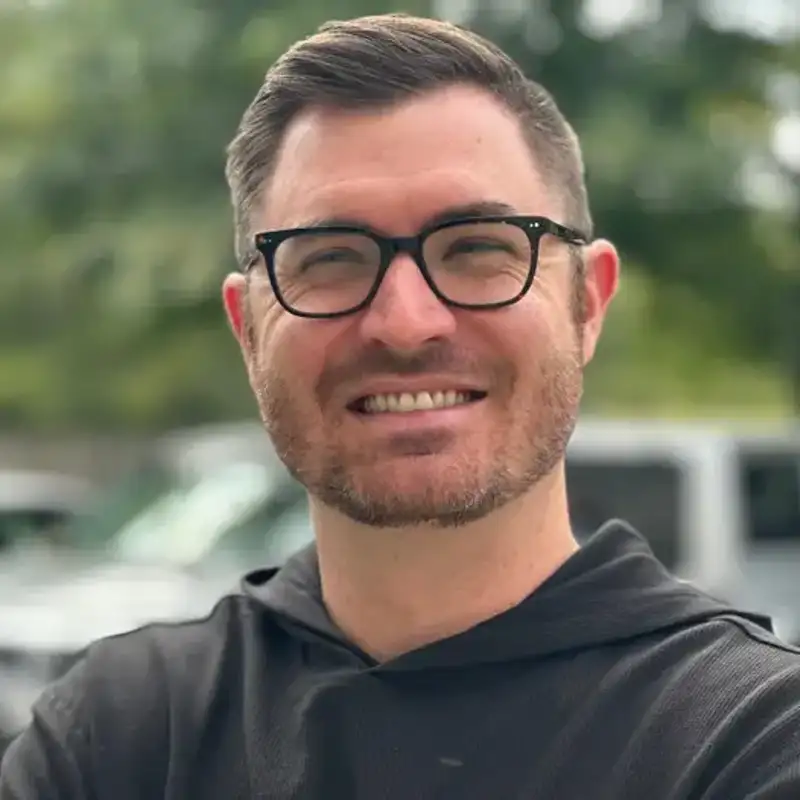
Sam Primm on scaling too fast, fixing what broke, and building a real estate empire anyway.
Sam (00:00.174)
I remember wanting to do 10 properties in 10 years and then I think like a year and a half in we had 10.
Vince
What happens when you set big goals and blow right past them?
Sam
I remember saying we wanted to own 25 million in real estate by 2025 and by 2021 we own 25 million in real estate. Every property has equity, every property cash flows, we're not using our own money. Where's the hole here?
Vince
When you grow that fast things break.
Sam
We thought we were cash flowing and I remember we were losing like 80 grand a month on some of our rentals that we had bought.
Vince (00:36.878)
Your success starts to create new problems. Even when you hit your stretch goal, sometimes the business hits back.
Sam
So now we have the right systems in place. I can know within a day or two of the numbers of each of the businesses.
Vince
This is Ground Truth, candid conversations with top PropTech operators doing the work at scale. So product teams build what the field actually needs.
Sam
Another thing that I think would be very, very beneficial to be able to solve would be
Vince
Righty welcome guys thank you for joining us for another episode of ground truth really excited we got another. I would be really lucky here to have some really cool guests especially for us to just be starting out we know that you guys are the best. Prop tech and fintech and home services tool makers in the world we just wanna make sure that you check in from time to time with what's going on again on the ground and so we will invite luminaries here into the show.
Vince (01:41.272)
to inform you of what's working, what's not, what they wish existed. And so today we have just such a luminary. Mr. Sam Prem is with us. This gentleman has been in the business for not that long, like just over a decade, right Sam? Yeah, just over a decade, but has managed to amass a $50 million real estate portfolio. And he flips and or wholesales a couple hundred houses a year. So I think that he knows what he's talking about and we're going to give him the floor.
Sam
Yep, 11 years.
Vince (02:11.031)
to tell us what's working and what's not and what he wish existed. But why don't you do your own intro? You can tell your story better than anybody.
like it. Well, I don't know what a luminary is, but I think it's a good thing judging by the context clues that you're discussing in your conversation. So thank you for calling me a luminary. Maybe I'm an Illuminati now. But anyways, yeah, you kind of mentioned it. I've been in real estate for a little over a decade. I took the journey that I think most people that want to invest in real estate take investing in real estate with a full time job for a handful of years, then kind of building up enough connections and resources and rentals and
And different streams of income to be able to quit my job and go all in on real estate. Did that about 2018 timeframe and then really stepped on the gas from 2018 to now is really kind of where I've gotten probably 95 % of my growth in my few different companies that I have. So you mentioned it. We flip and wholesale to 300 houses a year here in the St. Louis market. I have an online social media brand and education company as well.
And then I have, you know, property management and some construction management companies as well. We're kind of trying to grow our verticals within the space. I'm trying to not get squirrel syndrome and jump around too much, but we manage, you know, 75, a hundred flips a year. And at the same time we are managing rental turns and things like that. So just made sense for us to kind of provide that service for others. So we're, still relatively young, but I've done a decent amount at the same time.
That is remarkable. mean, that's incredible growth and 11 years to that point. want to go a few different directions here today, but it's just to stay there for a quick second. I think I saw that your initial plan was like to buy a house a year or something like that. Was that generally the roadmap you had set out? Tell me one number one, I'm correct, but then how did you pivot and get the explosion that has happened since.
Sam (04:01.41)
Yeah, when I started, so I've done all this with the business partners name is Lucas. He's been my friend since middle school. a lot of people, you know, say don't mix business with family and don't, you know, mix family and friends with business. But you know, we have not taken that advice or at least we haven't listened, but yeah, Lucas and I started talking about investing in 2012 timeframe. We had some conversations about it, you know,
talking like middle school together, high school together, both co-captains of the basketball team in high school, college together, going out, doing dumb stuff, getting in bar fights and you know, all the things you could think of for just a dumb midwesterner we did together. And then during college, we had a painting business called Budget Painting where we would paint houses, know, decks, fences, those types of things, basically for beer money. But regardless, so we'd kind of done a few things on a very low level together. And Lucas sent me the
book, rich dad, dad, read it and just kind of opened my mind because my plan was to work for one company and retire at 65. Like my dad did. worked for, for Boeing here in St. Louis for 40 years and retired. So that was all I knew. All I thought was going to happen. Rich dad, poor dad kind of opened my mind up a little bit. And Lucas and I not knowing really anything said, I want to let's buy 10 rentals. Let's buy one rental a year for 10 years. And after 10 years, we will start to sell off those rentals and
Hopefully we'll be able to retire a little bit earlier, but we didn't have enough money to buy rentals. So we didn't know all the methods and all the systems that are out there now. So we ended up just buying a house, planning to flip it and take the profit and put that down on a rental. And we ended up keeping that and you know, that sort doesn't really matter as far as you know, what we did with the property, but we ended up keeping it and learned about refinancing and debt and everything. So their original goal felt huge to us. I didn't know anybody that owned.
rental properties at the time. So 10 felt like a large goal, but we got into it, learn about leverage refinances, the Burrs method and, you know, bought a few and then thought, well, why would we stop doing this? Every property has equity, every property cash flows. We're not using our own money. Where's the hole here? So we just kind of kept going and haven't stopped since.
Vince (06:11.904)
Nice dude. It's rare. It's a blessing, but it's rare to have a friend so close as that who grows with you at the same pace. You mind just maybe staying there for a quick second? Did was he the kind of guy that was always reading those kind of books?
Yeah, no, he's, he's always been kind of that way. And, know, we had done the, you know, the painting business and we enjoyed working together doing that. I mean, we, try to become bookies in college too. I mean, we've always kind of had a little bit of an entrepreneurial itch and he's kind of always been that way. And we've always been, you know, gotten along really well living together. And a lot of people would, you know, try to shy away from that to not let business get in the way. But I think pretty early on we had a few different conversations, you know,
Friendship comes first, but the fact that we trust each other, we interact with each other so much that one plus one can equal 100. That that's not how math works, but if you have the right, you know, variables, it can. And that's how we feel like it works for us. Like our flipping company, we're to do over 300 deals this year, probably rehab 75 to 80 and whatever the rest of the math is 200 to 225. We're going to, we're going to wholesale.
I haven't been in a flipping company meeting in two and a half years and, our education company, have, we get 50 to 60 new community members every single month growing, doing affiliates, outreach, doing lending, lot of different things. He hasn't been to a education company meeting in two years. So it's kind of like a divide and conquer thing. And I do believe it's rare. think just the fact that we've been through quite a bit together growing up and, we understand that we have.
certain strengths together. And it's nice to have somebody when you're going down and you're kind of like in the dumps, somebody can lift you up and we're rarely kind of both or rarely one of us is down. But if I'm kind of down feeling, feeling sorry for myself, didn't hit whatever I wanted to hit that month and the businesses that I kind of manage Lucas is there to pick me up and vice versa. And I always say when we're both up, you know, you better watch the F out because we're going to do some really cool things. So it's been one of those things that just wasn't
Sam (08:21.314)
We didn't put a ton of intentional thought into it. just kind of happened and things have expanded pretty well since then.
Nice, so what's the inflection point? How deep are you in when you guys realize, OK, we got something here. We can really scale this.
a couple of different moments. remember wanting to do 10 properties in 10 years. And then I think like a year and a half in we had 10. And then I remember thinking that we are, we want to quit our jobs in the next five years. And we ended up quitting them about two and a half years later. Then I remember saying we wanted to own 25 million in real estate by 2025. And by 2021, we own 25 million in real estate. So I remember just, kept like crushing our goals that we were setting. Cause of we were naive or didn't know or ignorance.
whatever it was, we were seeming to crush the goals, everything we set. So two things happened. One, we said we're going on a pretty cool path. think here we're friends. We've been friends for 20 years. Should we bring up our friends and family with us and start to hire them and bring them in with us and help them grow wealth? Or should we keep that separate? And probably guess we decided to go with a, with a former, have 47, 48 team members and
15 or 20 of them we've known for years. mean, there's somebody just came my office a second ago, peeked in, closed the door. name's Andrew. I'd met him in kindergarten. So we've kind of brought our team up with us. A lot of them are buying rentals. They're flipping on the side, making extra income. We're paying them very well. So that that's kind of one really fun thing that we kind of had an inflection point with. And the other one was let's set a big ass goal because we seem to be crushing our goals. So now our long-term goal is to
Sam (09:55.15)
Is to own an MBA team and bring an MBA team to St. Louis. Now I don't necessarily think that's realistic. Maybe you never know. I to be positive here, but in general, it just would check the boxes, made a lot of money, made a lot of connections, made the community better, provided a ton of jobs and put St. Louis a little bit more on the map. So whether we get the MBA team or not, I want to do those things. The MBA team is kind of a cherry on top or just a visualization of what that would look like. Yeah.
I the ambition. You're speaking of scaling that quickly when you grow that fast things break and I'm curious. Yeah, I got stories for you too. We could probably share a beer and go over a bunch. I'm just curious what broke first.
would say the biggest thing broke was our, our accounting, not keeping up with that. We had grown very quickly buying rental properties and had money coming in from private lenders to buy this rehab, you know, fund this flip, you know, do the initial purchase of the Burrs method refinance out, which said money flying in or out. And we thought we were cash flowing. And I remember we bought three apartment complexes in like an 18 month period, nothing crazy, but like.
three to $6 million price points and none of them are cash flowing to this day. think we just, and this was probably three years ago we bought these, maybe four years ago in 2021. Yeah. So they're just starting to cashflow now because we just grown so quickly. It had worked for us. We grow, we overgrow ourselves and then we kind of pick up the pieces and slow down and then step on the gas again. And that was the time where we look back and we were losing like 80 grand a month on, on some of our rentals that we had bought because we had just been growing so quickly because
overly confident with everything had worked up to that point. that was definitely one big thing that initially broke that we're like, okay, let's take a step back. Now we have a CFO, a controller, two staff accountants and an accounting clerk. So now we have the right systems in place to, I can know within a day or two of the numbers of each of the businesses. So we're able to make up to date decisions based on actual numbers, not, hey, I think this is working. So let's step on the gas.
Vince (12:05.846)
Yeah this is great if you don't mind i'd like to i want to make sure that all these shows are practical tactical right what was it that surfaced. fact that there was this accounting gap where you rely on excel spreadsheets up into that point was it just a was it a personal issue reporting issue.
I think it was a combination of things. We had been through a few different account and like, you know, one or two people teams that were kind of running the accounting department. They were always playing catch up. Our we have, you know, we keep track of all of our different businesses and the bank accounts and that those started to shrink a little bit. And it was just noticing that things don't look right here. And when you flip, you know, 300 houses a year, that's thousands of transactions every single month, money going in and out with our
You know, 300 rental properties that we own rent coming in maintenance. are just so many moving parts that we never were able to get ahead. And that's when we hired our CFO. name is Danny. I've been friends with him again, friends been friends with him for over 10 years. He's a CPA, super talented guy lives in Chicago, rehabs, does new builds up there, owns rentals and had a CPA firm. And he actually sold his CPA firm to be our full-time CFO of our family of companies. And he kind of dug in and started to see some things and.
You know, we started to track what we were actually, you know, actually cash flowing from our rental portfolio with everything tied together. And then we started to see that, we're, losing a lot of money every single month without knowing it, because again, money coming in and out, we're buying five, 10 rentals a month. doing, you know, a lot of things going on. there's, you know, a few million bucks going in and out every single month that nothing pauses. we didn't know.
Did you guys have to build something custom? And if you did build something custom, I'd to hear about that decision in that process.
Sam (13:53.954)
We do have a custom software, a couple of them coming out, but before that, so we did most of our things in QuickBooks, but QuickBooks is not where we manage our rentals. So that's another thing that I probably am glad you had this follow up kind of helps me kind of backtrack a little bit and maybe fill in some gaps is everything was run in our software for our rentals in a software called Buildium. It's a property management software. It has a financial aspect and financial tools to it, but they're not.
good. They don't keep things up to date. It's really good for property management, but it's not super good for financial management. So that was part of it. So we had QuickBooks for our operating companies and our rental portfolio, which is the biggest issue for a while, at least was we had that in in the building of software. So we're switching over to a property management software, a different one. And then we also are looking into dual entry to replace real to replace QuickBooks that I think is maybe a little bit more.
customizable and maybe a little bit more suited for our unique situation. mean, you know, there's companies out there that do 10 times in a day what we do in a year and they have a lot of different, you know, resources, but it's a little bit rare to have a flipping company and education company, property management, managing for others, renovations, and then a lot of different ins and outs. So is, it is, you know, pretty unique for the solopreneur game, but there's
much larger companies out there that would laugh at the simplicity of our books. But we're still kind of working through that, honestly.
But I think I hear an opportunity. so to the tech guys who are listening, one of the things we say internally, Sam, is we really like proximate founders. And what we mean by that is people who actually do the business for which they are building the tool, right? Because you got a bunch of guys who have never flipped a house but have a notion about what that tool should look like and intends not to work out well. But those proximate founders tend to do really well because they've been on the ground. They've seen it. They've touched it.
Vince (15:52.238)
I guess my advice to those folks who are watching, if you can find people in your market who are operating at a very high level before you write the first line of code, before you do that first wireframe, you should talk to guys who are in the business. Okay. That's super helpful that you had that, that challenge and that's how you solved it. If you had a magic wand, what would you wave it at? What's the, what's another wrinkle in your business that you go, man, if there was a tool that did this, we'd be off to the races.
Yeah, there's a couple of different things we're looking at. One of them I'm trying to solve with a software that we're developing right now. And I barely know what API is. So obviously I'm not the one who's doing the back end on that, but we can talk a little bit about that. But another thing that I think would be very, very beneficial to be able to solve would be being able to walk into a property and take pictures and videos and get a somewhat customizable, somewhat accurate rehab budget.
Rehabs are crazy. Me, you and 20 other people could all walk into rehab. We'd all have different rehab budgets and they'd all be wrong or right however you want to look at it. There's no one way to do it because there's so many variables. But to be able to quickly and somewhat accurately be able to pictures, videos, enter a little bit information, get a rehab budget, I think is something that I know some people are looking into. I think would be super, super beneficial. And I think it would.
could help out a ton. And one more to kind of piggyback and then we can peel those apart little bit is running comparables on property. Whether you're looking to wholesale, buy your own, sell to other people, do flips. Copying properties, it's an art, it's a science, there's some math involved, but there's so many different ways to look at a property, find other properties in the area that have sold that are similar condition to what yours will be once it's fixed up to figure out exactly.
you know what that timeframe is because if it's a you're looking at a property that you want to buy that's stressed and there's a property that sold five, six months ago, you know, in the same area, it's gotta it's gotta be the two store. If yours is a two store, it's gotta be similar square footage within a certain percentage. So there's just a lot that goes into it. And if you're able to accurately figure out what the if you're able to accurately figure out what the property is going to be worth once it's fixed up and you're able to accurately figure out what it's going to take to get that fixed up before you buy it.
Sam (18:15.04)
It's, it's, it's the, one of the biggest struggles that people have. It's called the max level offer formula, ARV times 75 % minus your repairs and costs. If you're able to quickly calculate that and not have to spend, I'll just talk with someone, or one of our people in our flipping company, he underwrites for about four hours a day to properties to try to help come up with offers. And if we could systemize that and streamline that with accuracy, I that would be a big opportunity.
I double tap on this. think I just heard you say that somebody who is good at this business underwrites for four hours a day. you guys don't take the bait there, mean, this is a deep and persistent pain point.
He makes, he makes multiple six figures a year and we had someone doing it and he stepped in cause he's really good at it. And he could be doing a lot of other things, but he's the best fit for it. Now we're hiring and training other people to do it. But for the past two weeks and probably the next three, four weeks, this is what he's going to be spending half his time. So we, would pay a lot of money to solve that problem. Cause he makes a of money.
Wow. And then just to double tap once more, and I don't want to lead the witness too much here, but I think I hear you saying that this tool ideally would allow someone like your COO to still express an opinion. I think I hear you saying that he's got all this knowledge. You don't want him to forfeit that and rely on the software. You want him to have really great software that's got good data, but also allows him to inject his opinion. Is that a fair statement?
Yeah, that is a fair statement. it's it's something that I don't know it because there's an opinion to it because again, different appraisers who are that's their job. We're to have different so there's there different numbers that they're going to have. So there's a different opinion and you take rehabs. Someone's going to take it further than the other person and there's nothing right or wrong with that. Just depends on what they want to do and how they want to do it. But if we could not have to have 18 different tabs open up where to go to find the tax records, where to go to find the properties, where to go.
Sam (20:17.998)
to find the current property data. We're like all of the different places that you have to go and I honestly don't know them anymore because I haven't underwritten a property of that house in years. I help with the apartments that we buy because it needs more eyeballs on that's more zeros and more commas there. But as far as being able to get to a certain point and streamline that, I think could be very, very beneficial with just.
getting everything in one place and getting us 90 % of the way there and let us kind of cross-reference things.
Yeah, I love it. That's huge. That's huge. There's lots in there. Yeah. Speaking of getting things underwritten well and prep for financing, you all this leads to, you know, a bank or a hard money lender, some capital provider. You I don't know if this is intentional, but if you Google yourself, you will find that very often your quota to say and avoiding debt is like running a marathon with no shoes on. Am I getting that right?
It's gonna hurt. Talk a little bit about one, the sentiment and it's a great phrase, but just talk a little bit about your philosophy there.
Yeah, I think it's just one of those things where we're taught growing up that all debt is bad. unless your day, we don't take for instance, don't go down that path. Not all debt is technically sad. There is bad debt, but there's also good debt and it's called leverage. think that's one of the most powerful underutilized tools of people that want to get to the place that they're not. I can't think of anyone besides maybe the one person I just mentioned that has gotten to a very, very high financial level.
Sam (21:53.922)
that hasn't used leverage in shown some shape or form from Bezos to must to Zuckerberg to all of these people. They all get infusions of cash, which is debt to grow their company, to grow their business, to get more R and D, to get more tech involved. That's leverage. You're borrowing money to grow and do things faster than you could do them on your own. And I just kind of take that concept of leverage that I think any.
business person that's at a high level is going to tell you they leverage people's knowledge, their time. I always joke, have 45, 50 team members. get $400 worth of work done every single day leveraging their time. As you mentioned earlier, I have 50 million in real estate. I haven't used any of my own money to buy it legitimately. It does come with 30 million in debt, which scares a lot of people, but I have a post that usually goes viral and it's pretty simple. It's just, I have 30 million in debt.
But it allows me to own 50 million in real estate and that 30 million in debt costs me 150 grand a month, that real estate is in 350 grand a month. So if you, if you look at it, every dollar debt I get into, I make more money actively pay less taxes and build more wealth with it. So it's just one of those ways that there's risk involved, but there's risk in starting any company there's risk in opening that laundry mat and be starting a landscaping business. There's risk in pretty much anything you do. I just like the fact that if you follow the plan, the process.
Real estate gives you so many different avenues and so much agility that it's just the best path in my opinion. don't think there's anything particularly close.
Yeah, well said. I don't want to I want to make sure that we give proper weight to what it takes in terms of the mental personal growth to get to the place of being able to make a statement like that, that I have one hundred fifty thousand dollars in debt service to be able to say that and have it not be a scary statement. It just really says a lot about the other areas of growth that you've invested in. Most folks, I think, have not done the work.
Vince (23:55.618)
the self-development work to get to a place to be able to manage that so good on you.
you. I look at it as I'm just maybe a psychopath or sociopath. I joke that if anybody I know gets admitted to an insane asylum, I'm not visiting them because I think they'll keep me. So maybe it's just
It could be a little bit of both. tend to think it's not that and I want to go here to, kind of our final chapter. And I'd be remiss if we didn't pivot just a little bit, you know, and I hope you don't mind me sharing and I hope you'll share a little bit more when we were together recently in St. Louis, which is your hometown, which is where you operate. We were there for mastermind event, kind of a subset of a larger mastermind that we're a part of.
And you gave a share that I just thought was remarkable. I have talked about it to people. have posted on my social media about your share and what you shared was the degree to which you invest in your people and the degree to which you hold them accountable to success, even outside of their job with you. Do you mind talking a little bit about that life scorecard?
Yeah, for sure. So this is something that we implemented recently as we've grown. We're to the point where we're not huge by any means, but we have leaders managing other people. we have, you know, I have to, of my job now is, is not leading people. It's leading leaders that are going to lead people. So you're only as successful as your leaders when you get to a point where you have other people leading things. So we've, taken that pretty seriously. So.
Sam (25:22.764)
We have a life scorecard that you mentioned. All of our leaders, we meet every Monday morning. So this is the COOs of each of the companies I mentioned, our finance department, our CFO and loops and I. there's about seven of us that meet every Monday morning and we go over. This is how I know what's going on in the businesses that I'm not directly involved in. go over the numbers that metrics to track. have conversations. There's an issue. We all kind of huddle up and try to solve those issues together at the level that we're at.
And part of that, those are the people that are making our company grow. So we want them to grow as people. So we do leadership training with them. Once a month, we hired a leadership business coach that comes in once a month and we all, seven of us get together and go over being vulnerable, having conversations, people just having them grow as leaders. And then the life scorecard, we have them write down the three things that they want to accomplish. know, some of them, as you, I think I sent you a copy of some of them are, you know, going on.
two dates a month with my wife and planning a vacation for the kiddos and creating a vision statement for our family. That's one person's name is Matt, that those are his three recently, I believe. And we hold them accountable to that. Like why haven't, why has this one not moved to the done status? Like what's going on? What can we help you with? And we even go as deep as to have them voluntarily do a health assessment where we get their body fat. We get their metabolic age, you know.
their current financial situation, what's their net worth, what they want their net worth to be, what's their monthly income. We know that for the most part, but where do you want that to go? So we, we built out a store card that kind of encapsulates all of that. And we talk about it once a month and in our Monday morning meetings and in our half year checkup in our year final meeting, we'd have a little bit longer of a retreat. really did dive deep into those things because we want them to be happy. want them to enjoy being here, but we want them to be healthy and we want them to be, you know, productive members of.
our family and their family at home.
Vince (27:15.47)
Where did that idea come from? What sparked that?
Lucas, was that was Lucas thing. He's kind of a hippie is a little more of a hippie than me. He's an engineer hippie kind of guy. So not that that's a hippie thing, but we always kind of joke. I, used to kind of reject the mindset side of things. Like, I'm just going to roll up my sleeves and not work here. I don't care if you do a breathing, you know, exercise every morning and hang by your toes and eat shawarma or, all that, like, I'm just going to outwork you. But I realized not quickly, because I sometimes I'm hard headed that that there's a ceiling to that. So Lucas got on the whole.
self-development, mindset, meditation, being present earlier than I did and then kind of grabbed me kicking and streaming up to that. And then when I fully embraced it and we both did it, we kind of brought that down to the team.
that. Like I said, I was floored. I was totally floored by that. And we're taking steps to implement some of that in our company. So thank you for that share. And thank you for sharing it with this audience as well. So Sam, this has been amazing, dude. I think the takeaway for me is that if you want to, uh, you want your children to be successful and to have a good circle of friends that are good business partners, you should raise them in St. Louis. I think that's kinda, I think that's kind of the takeaway here, bro.
Louisville, the general GDP here, you know, higher and then we'll be to be 18 bring them on.
Vince (28:33.186)
That's right. There's something in the water there, right? Get them all there, raise GDP and get that franchise there, man. So no, that's amazing. And in all seriousness, I think the big takeaway is, wow, there is a lot of room in the market for, you've solved some of the accounting issues, but that still was a big pain point. Took several steps and several products to get resolved. Yeah. And then the comps one was the big one, being able to do that, but do that in such a way that you can still inject your opinion.
But it just sounds like a real time suck. And so there's a big, big opportunity there. And so people who are listening would do well to talk to high performers and see if you can fashion something around their workflows. Anything you want to share in closing with the audience?
Yeah, I think depending this may be a no brainer to some people listening and it may be kind of eye opening to others. think the biggest thing that I like to usually leave people with is I think our society has a huge gap in what it takes to be successful and their mindset that they think they have to travel on to get there. As I said earlier, I was not a mindset guy. Now I am. But I think one of the biggest mistakes people have is they avoid failure. And from my experience and everyone I talked to that I look up at it successful.
It's not something to be avoided. It's something to be embraced and it's something to be sought out. You're not going to be successful without failing. I don't know one person and I would venture Vincent Vince. You don't know one person that has been successful that hasn't failed. You avoid fail. You avoid success. It is on the path. There's small failure, big failure, little success, little failure, big success, big failure. It's literally the path you have to walk to be successful. So if you know that embrace it.
Maybe don't seek it out, but just understand as part of process. think people can move a lot faster than they're moving now as they're walking on eggshells and tippy towing around avoiding that failure. When in reality, they're just avoiding the success that they're searching for.
Vince (30:28.408)
can't imagine a better way to close. Sam Prem, ladies and gentlemen, $50 million in real estate and tens, hundreds of millions worth of wisdom there in just a few minutes. So I hope that you guys got a lot of it. I certainly did. And I really, really appreciate you coming on Sam. Really, this is excellent, man. Appreciate you.